Suicide note reveals MP girl committed suicide in Nagpur due to cancellation of NEET exam
The deceased girl, Akansha Chaturvedi, belonged to Magania village in MP's Mauganj district.
Madumar, located in Tikamgarh district of Madhya Pradesh, is an ancient village with a huge tank spread over about 100 acres of land.




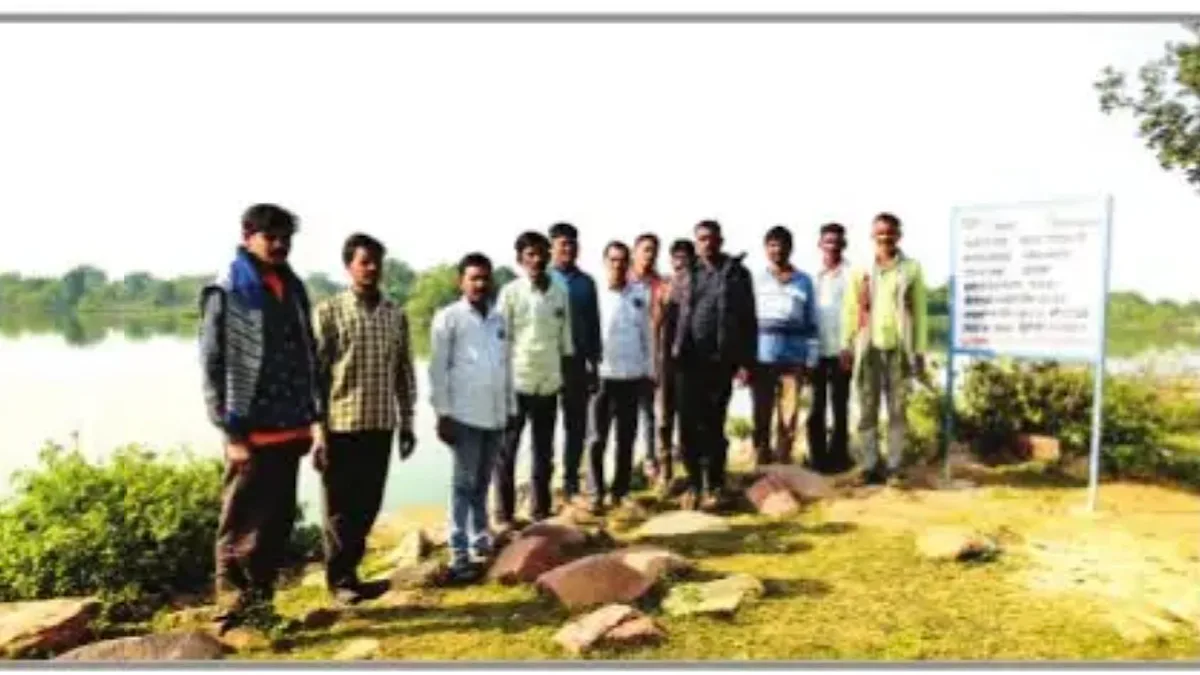
Photo:SNS
Madumar, located in Tikamgarh district of Madhya Pradesh, is an ancient village with a huge tank spread over about 100 acres of land. People of this village take pride in relating mythological stories which establish the ancient origins of this village. This tank goes back to the times of the Chandela kings who had ruled in the Bundelkhand region from the 9th to the 14th century.
The Chandela kings are known for the water heritage they left behind in the form of several well-planned and constructed tanks which continue to serve people to this day. The Madumar tank is one such tank which continues to be an important source of irrigation and fisheries, meeting the water needs of many people and animals. Its heritage importance is enhanced by its location close to the famous Jain religious centre of Paporaji, earlier known as Pampapur, which consists of about 108 shrines. Apart from their religious importance, they are noted for their architecture and wall paintings and attract many pilgrims. Their history goes back about 800 years. Another important heritage aspect of this site is that a big and traditional agro-processing centre existed very close to it in the past and its remains can still be seen. Some villagers to whom I spoke said this probably consisted of processing sugarcane juice to make gur or jaggery.
Advertisement
However, Kamlesh Kurmi, who has been involved in the renovation work of the tank closely, says that this centre is likely to have also included processing of edible oil (this area is known for several oilseed crops including groundnut, mustard and sesame). The prospects of reviving traditional agro-processing here can be considered from the perspective of livelihood support, making available healthier food products and protecting heritage. This will be welcomed by traditional processors who have been increasingly neglected and marginalized in recent times, although the processing done by them resulted in products with higher nutritional as well as medicinal properties.
Advertisement
While the Madumar tank obviously has great heritage as well as utility value for common people, its cleaning had been neglected for a long time and therefore a lot of silt had accumulated here. In an important recent initiative, a voluntary organization, Srijan, which has initiated development initiatives in this region, took up the work of de-siltation of this tank with the support of the Inter-Globe Foundation. This has helped to clean up the tank and to increase its water receiving and retaining capacity.
This will reduce distress caused by less than expected rain or a drought situation, as well as an excess rain or flood situation. Thus, such initiatives not only protect water sources and increase irrigation, but in addition also help to reduce the adverse impact of erratic or extreme weather situations and disasters and hence are particularly useful in times of climate change. Such efforts are an important component of climate change adaptation. When de-siltation work was taken up, a lot of fertile silt taken out of the tank became available. Farmers used their own resources to carry this silt to their fields, thereby improving the fertility of their farmland.
This in turn will be helpful in Srijan’s efforts to spread ecologically protective natural farming practices among farmers. Such efforts which are still in the initial stage also include the spread of small orchards and multi-layer vegetable gardens. The participative nature of these efforts is evident from the fact that farmers are estimated to have spent nearly twice the amount for carrying silt to their fields (about Rs 5 lakh) compared to the amount spent on de-siltation of the tank (Rs. 2.5 lakh).
During my recent visit, we had a nice group discussion with villagers under the shade of a peepal tree, sitting on a chabutra or raised platform. Srijan members were discussing plans of taking up tree planting work here. It was decided that only indigenous species will be selected and in addition some flowers will also be grown. This work will be extended to the nearby Garora tank as the two water bodies have been traditionally considered to be related to each other. If in addition, the traditional food processing is also revived, this can also become a heritage site located close to the famous Jain pilgrimage.
In due course of time, as natural farming progresses with vegetable and fruit gardens, these healthy food products can also be marketed here, combining heritage protection with the enhancement of livelihood opportunities. Srijan is also looking at water heritage protection in a wider context. As Rakesh Kumar, who has been closely involved in these efforts says, ultimately all water bodies and water channels are inter-related and linked to the protection of the important and sacred rivers of the region like the Ken and the Betwa and their various tributaries. Hence the water-related work of the organization extends to many water channels and rivulets, combining a perspective of livelihood improvement, conserving water and heritage protection. In a water channel near village Maughat, for instance, the focus is more on digging ditches called dohas that will help the water to be conserved for a longer period during the dry season.
This is helpful for farmers to get irrigation water but in addition it is helpful for animals and birds to quench their thirst. A gabion-wall structure has also been constructed to conserve water and already one can see more birds collecting near the water conservation site. This work too is taken up along with promotion of natural farming, and vegetable and fruit gardens in the village. In some other places it has been seen that several benefits can accrue from repair and renovation of existing structures that have been damaged due to various factors. I visited one such site in Mamau village.
Here the check dam constructed earlier had proved to be useful but then then someone stole the gates and these could not be replaced for a long time. As a result, the entire structure fell into disuse. Recently Srijan arranged a modest budget to install the gates and take up other renovation work. The result is that not only are about 25 farmers able to irrigate their fields, but the water table in the three settlements of Mohanpura, Dhajrai and Hajurinagar is going up. Similar efforts to improve damaged structures, particularly check dams, have given good results in villages like Markhera, Ramnagar and Banpura.
(The writer is Honorary Convener, Campaign to Save Earth Now. His recent books include India’s Quest for Sustainable Farming and Healthy Food, Planet in Peril, Protecting Earth for Children and Man over Machine.)
Advertisement